
Picking the wrong printing method is an expensive mistake. Whether you're decorating a single custom tee or filling a 500-unit order, the gap between DTG vs. screen printing is real — and getting that call right from the start saves you time, money, and reprints.
Both rank among the most popular methods in garment decoration for good reasons. But they're built for different scenarios, and understanding those differences is what separates a profitable print operation from a costly one.
What Is DTG Printing?
DTG printing, or direct-to-garment printing, works like an inkjet printer for clothing. DTG printers use water-based vegan inks to translate a digital image directly onto fabric with precision and unlimited colors.
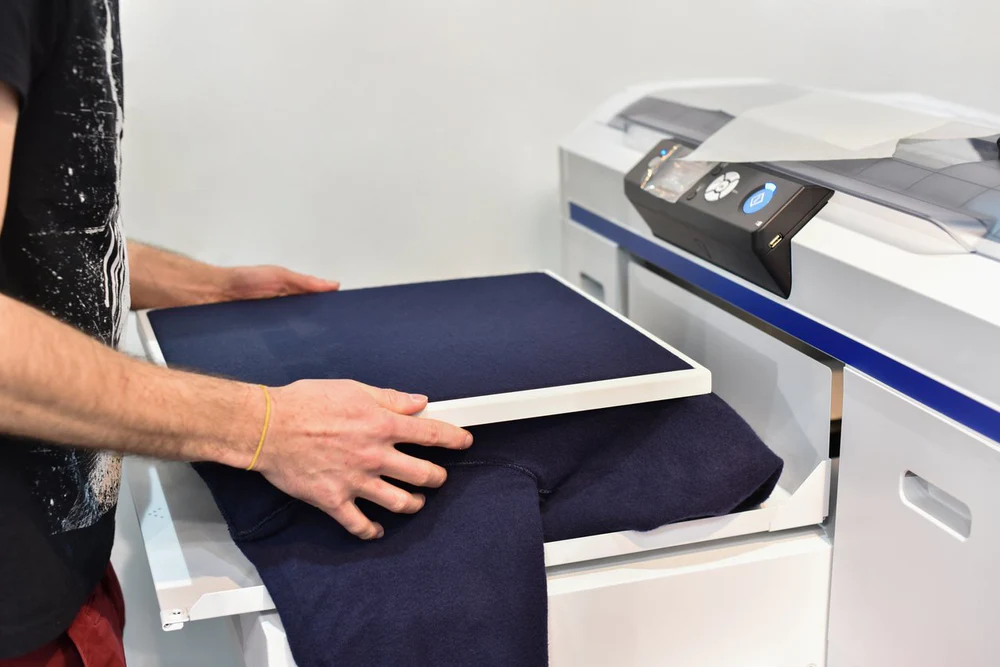
The process begins by loading the garment flat onto a platen. On dark fabrics, a pre-treatment step is applied first so the direct-to-garment DTG ink bonds properly and vibrant colors stay true through washing.
Direct-to-garment printing requires minimal setup time. No screens, no color separation, no minimum order. That makes DTG printing ideal for on-demand printing, custom t-shirts, and detailed designs with multiple colors or smooth gradients.
DTG requires minimal upfront investment, making it accessible for shops that want to offer custom printing without heavy overhead. Knowing how much ink is in a printer cartridge matters for cost planning here, since DTG printing ink usage varies considerably with design complexity, color coverage, and fabric color.
What Is Screen Printing?
Screen printing is one of the most established traditional printing methods in garment decoration. As a traditional printing method, screen printing uses a mesh stencil to push ink through a fine mesh screen onto fabric. A separate screen is required for each color, and creating multiple screens for complex designs takes time and increases initial costs.
Different screen printing methods — from spot color to halftone — all require handling multiple colors with separate screens, making screen printing labor-intensive for multi-color designs. Plastisol inks, the primary screen printing ink type used in most applications, sit on the fabric surface rather than soaking in.
These inks contain PVC, making them less eco-friendly than DTG printing inks. The result is a thick, more textured feel with beautiful, saturated, vibrant colors and that distinctive, authentic look screen printing is known for. Screen printing presses can also use UV light to cure specialty inks, enabling effects like glitter, puff, and glow-in-the-dark finishes.
Traditional screen printing remains a popular method for mass-produced custom apparel. At volume, it's fast, consistent, and cost-effective.
DTG vs. Screen Printing: Key Differences Explained
 The cost of screen printing depends primarily on color count and order volume. Comparing DTG vs. screen printing across the factors that actually matter is the fastest way to find the right fit. Understanding how DTG and screen printing differ in quality, cost, and durability puts you in the driver's seat.
Here's a quick side-by-side before diving in.
| Factor | DTG Printing | Screen Printing |
|---|---|---|
| Best for | Small batches, complex designs | Bulk orders, simple designs |
| Setup cost | Minimal | Higher per color |
| Color range | Unlimited | Roughly 9 colors for gradients |
| Fabric compatibility | Best on natural fibers | Works on most fabric types |
| Feel | Soft, ink absorbed into fabric | Heavier, more textured |
| Durability | 50+ washes with care | Lifetime of a garment |
Print Quality and Detail
For detailed and intricate designs, DTG printing has a clear edge. DTG printing creates a precise, high-detail design. High-quality prints with photorealistic images, smooth gradients, and intricate details come naturally to DTG printing work. With unlimited colors, multi-color designs carry no added cost or complexity. It's the stronger choice for detailed designs and fine details that screen printing can't efficiently replicate.
Screen printing produces beautiful, saturated, vibrant colors and a look that's hard to beat for simple, bold artwork. It's strongest with solid colors and clean shapes. The screen printing process struggles with fine details and complex multicolor gradients, and the limit is roughly 9 colors before advanced screen printing techniques start to drive up costs. Reliable printer printheads are central to DTG print quality. A worn or clogged head degrades color accuracy and consistency across every single run.
Cost and Order Size
Screen printing costs are front-loaded. Creating a separate screen for each color is a real initial setup investment. What makes screen printing a cost-effective solution for bulk orders is how those setup costs spread across large quantities. The final price of a bulk run depends on the number of colors and the number of screens needed to print them. Ordering in bulk also means managing storage and fulfillment of custom t-shirts, which limits how many designs you can realistically offer at once.
DTG printing reduces setup costs dramatically. With no minimums, it's the most cost-effective choice for creating custom t-shirts on demand — particularly for small batches of 1 to around 20 units. You can buy printer ink online to keep your DTG printers stocked without committing to large upfront volumes. That said, DTG printing typically doesn't offer the bulk savings that screen printing does, so it still favors the screen-based approach for large orders. Third-party print services rely heavily on DTG printing for on-demand fulfillment, since printing occurs only after a customer places an order.
Fabric Compatibility
DTG printing is best suited for 100% cotton fabrics, where water-based inks absorb most effectively into natural fibers. Direct-to-garment (DTG) on synthetic fabrics and polyester blends produces weaker results — the ink can't penetrate as deeply, leading to duller colors and faster fading. Dark fabrics also require pre-treatment before printing, which adds a step.
Screen printing is more versatile and works well on a variety of fabric types, including cotton and synthetics. It excels with bold, bright colors on dark garments without needing complex pre-treatments. For intricate designs across a mixed-fabric order run, screen printing offers greater consistency and flexibility.
Production Speed
DTG printing is ideal for fast turnaround on small orders, often completed the same or next day. The process begins in minutes with no screens to burn or inks to mix. That makes it the right printing technique for rush jobs and last-minute custom designs.
Screen printing presses are built for volume. Once the screens are set, the printing process runs fast — producing hundreds of units per hour at consistent quality. For bulk orders, it runs significantly faster per unit than DTG printing. Fast at the start, slower at scale for DTG. Slow to set up, fast at volume for screen printing.
Durability of Prints
Screen printing is the benchmark for durability in garment decoration. It's known for its durability due to the thicker layers of ink applied during the screen-printing process. Plastisol inks cure into a resilient layer that can last the garment's full lifetime, making it the standard for sports uniforms, workwear, and anything that goes through heavy, repeated washing. It typically has a heavier, more textured feel as a result.
DTG printing produces a softer print as the ink enters the fabric, making the clothes more comfortable to wear. According to Printify's DTG vs. Screen Printing guide, DTG prints can withstand over 50 washes when laundered inside-out in cold water and kept away from high heat. Maintaining your printer's spare parts — especially the printheads — directly affects DTG print quality and consistency from the very first run.
DTG vs. Screen Printing: When to Choose Which?
 The two methods cover different ground. Choosing the right printing method comes down to your specific production situation — order size, design complexity, and what the end product needs to do.
Choose DTG printing for:
- Small batches, photorealistic images, or intricate designs
- On-demand printing with same-day turnaround
- Creating custom t-shirts with no minimum order requirements
Choose screen printing for:
- Bulk orders of 50 or more units
- Designs with just a few colors and solid shapes
- Printing on multiple fabric types, including synthetics
- Maximum durability or specialty ink effects like metallic or puff finishes
Many DTG and screen printing operations pair both methods side by side, with each covering what the other can't. That combination is a cost-effective model for shops servicing both retail and wholesale clients.
There's also a real sustainability case for DTG. DTG uses water-based vegan inks that are non-hazardous, toxin-free, and biodegradable, and many DTG printer manufacturers produce almost zero wastewater. Screen printing uses more water and chemicals during cleanup; most of these methods use inks containing PVC, and bulk ordering can result in unsold inventory ending up in landfills. Using a print-on-demand DTG service helps save money and cuts production waste.
As Dr. Lisa Parrillo Chapman, Professor and Director of Doctoral Programs at NC State University's Wilson College of Textiles, noted in an interview with NC State's Research Triangle, "there are advantages with reduced energy use, chemicals, and water waste when we're comparing digital printing to screen printing."
For shops running wide-format or specialty work alongside garment jobs, eco-solvent ink is worth a look. Understanding how different ink types interact with different printing methods shapes smarter purchasing decisions across your full fleet.
Frequently Asked Questions (FAQs)
What Are the Disadvantages of DTG Printing?
DTG printing works best on 100% cotton. Results on polyester and synthetic blends are often weaker and less vibrant. Per-unit costs run higher than screen printing at volume, and prints need careful laundering in cold water, inside-out, to hold up over time.
What Lasts Longer, Screen Print or DTG?
Screen printing generally lasts longer. Plastisol inks cure into a durable layer that can last the full lifespan of the garment. DTG prints can exceed 50 washes with proper care, but for high-use, heavy-wash applications, screen printing still outperforms.
Which Is Better, Screen Printing or DTG?
Neither is universally better. The right choice depends on order size, design complexity, and durability needs. DTG wins for small runs and complex artwork. Screen printing wins for high volume with simple, solid designs where long-term durability is the priority.
What Is the Best Method of T-Shirt Printing?
The best method fits the specific job. DTG suits small-quantity custom apparel with water-based inks, producing a soft, comfortable feel. Screen printing is well-suited to high-volume runs with clean, solid-color artwork. Many professional shops use DTG and screen printing together to cover every order type profitably.
Final Thoughts: DTG vs Screen Printing – What's Your Pick?
Both DTG and screen printing are proven, commercially reliable methods built for different production needs. There's no universal winner here.
If flexibility, on-demand printing, and small-batch custom work define your operation, DTG is the stronger fit. If volume, durability, and consistent output across large orders are your priorities, screen printing is the way to go. Plenty of successful shops run both — and the results speak for themselves.
Getting high-quality prints from either method starts with the right equipment and supplies. Whatever printing technique you run, the parts and inks behind it determine the quality of every shirt that leaves your shop.
