
Have you ever encountered smudged labels, faded barcodes, or a printer that breaks down when needed most? You're not alone, and it's really frustrating. But the great news is that correctly identifying the right label printer is no longer so difficult. Whether running a small mom-and-pop store, keeping inventory, or shipping hundreds of packages a day, the right printer will help you take a load off your mind and help you make the entire process much easier.
Let’s discuss your labelling needs, things to consider when selecting a printer, types of printers, and features that actually matter, and provide recommendations for different industries. We are confident that by the end, you will be ready to take action, whether that be purchasing your printers online, scheduling printer installation, or upgrading with a white toner transfer printer or DTF printer ink configuration.
Understanding Your Labelling Requirements
Before you start weighing brands and models to buy printers online, take a little time to think about these questions:
- What do you really need from a label printer?
- Are you using it to print shipping labels, product labels, or barcodes?
- Would you need labels for indoor use only, or would they be for heat, moisture, or chemicals?
- Will you print occasionally or daily, with high-volume printing?
- Do you need your labels in black-and-white or color and branding-ready?
Answering these questions will make selecting the appropriate printer for your needs much easier.
Types of Label Printers
There are various types of label printers that you can choose from:
Thermal Transfer Printers
Think of these as the tough guys of the label world. They print onto labels using heat to create a long-lasting result that can withstand harsh environments. If you manufacture or logistically distribute in the pharmaceutical space, connecting with printer installation services can be an ideal choice.
Why? They will not fade easily, and they can resist chemicals and heat.
Remember: You must purchase separate ribbons to run the printer, which adds to your running costs.
Direct Thermal Printers
These printers utilize paper sensitive to heat, not ink or ribbons. They are ideal for printing shipping labels, receipts, or barcodes that will not be saved for an extended period.
Why are they special? They are easy to use, need little care, and are inexpensive.
Things to Consider: Labels can fade due to light or heat over time.
Inkjet Label Printers
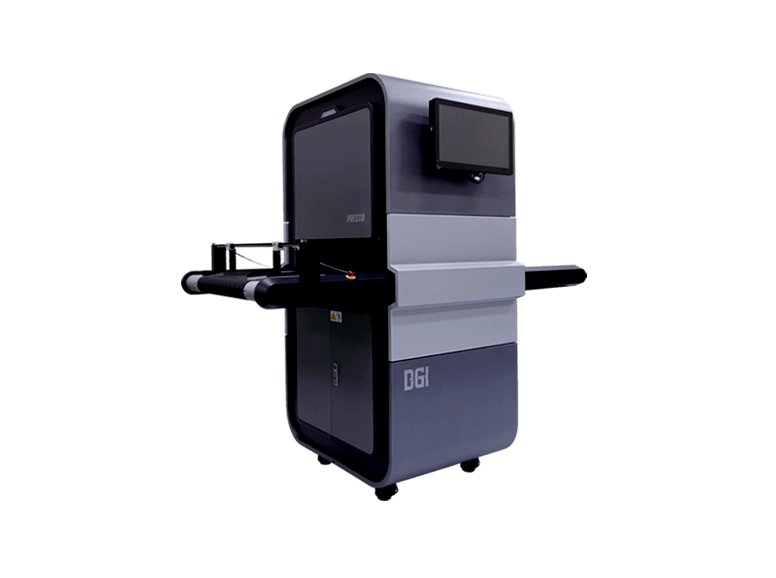
An inkjet printer like the DGI Presto is an excellent option if your labels are purely for branding purposes and you want beautiful, colorful labels. This printer makes gorgeous, high-quality printing; perfect for food packaging, boutique products, or other creative businesses.
Why choose inkjet? Excellent print quality and colors.
Things You Should Know: Ink can get expensive, and print speed is usually slower.
Laser Label Printers
You can rely on a laser printer if your main priority is speed and efficiency. They can print large volumes quickly and cheaply using toner.
Why choose them? They are fast, reliable, and ideal for volume.
Things to Know: Limited compatibility for label materials compared to a thermal printer.
Key Features to Look For

Here are the key features to consider when choosing a printer for your labelling needs!
Print Volume and Frequency
If you print only occasionally, a basic inkjet or laser printer is fine for your needs. But if you manage a warehouse or ship daily, thermal transfer printers or industrial-grade lasers are designed to keep up with your needs.
Print Quality
Does your branding stay with your printed labels? If so, you'll want a quality inkjet printer for its sharp prints in full color. Thermal transfer will give you the best clarity for barcodes and compliance labels.
Label Size and Material
Not all printers support the same label size and material. Ensure your printer can take your label size and material, whether a small barcode sticker or a large vinyl, polyester, or synthetic shipping label.
Ink Type and Cost
Remember long-term costs as well: DTf printer ink costs, toner, and ribbons vary and are worth considering. While direct thermal print technology saves money on consumables, inkjets can be costly if you have to fill them often.
Connectivity and Usability
Many printers today make printing easy with their USB, Wi-Fi, Bluetooth, or Ethernet connections, but if that sounds too complicated, have the printer properly installed, and you and your staff will not have any problems using it.
Cutting Feature
If you print labels at a custom size, an automatic cutter is a game-changer -- it will spare you the cut-by-hand step in the printing process!
Durability
If you will be using the printer in a high-use environment, choose an enhanced model for durability.
Brand and Warranty
Go for a line of products from a brand you trust and have confidence in. Their warranty policy is good, and it is nice to know your investment is covered!
Industry-Specific Recommendations

All industries face their own unique printing problems. Here are some quick tips:
- Retail & E-commerce: A direct thermal printer would be ideal for quick and cost-effective barcode/ shipping labels.
- Manufacturing: A thermal transfer printer is suitable for long-lasting labels with chemical and heat resistance.
- Healthcare & Pharmaceuticals: Thermal transfer printers are ideal again for accuracy and durability.
- Food & Beverage: Use inkjet printers instead because they allow stunning colored labels to enhance your branding.
- Corporate Offices: Laser printing speed, volume, and cost efficiency are ideal
- Creative Businesses: A white toner transfer printer lets you print on a dark surface and helps create specialty designs.
When you invest in a printer for your industry, it eliminates headaches and the expense of not getting the results you want.
Conclusion
Knowing your requirements for finding the best label printer (volume, quality, environment) is easier than it sounds. A direct thermal printer can do the job for typical shipping, while a thermal transfer printer can work for industrial, long-lasting labels. If you focus on intense color for branding, an inkjet printer will be best for presentation. If you plan to print in bulk, a laser printer saves time and costs. Don't forget to budget for continuing expenses, such as ink or ribbons, and label durability and warranty. Also, remember, you can order printers online, and they will come with installation. There is a correctly sized printer for every need, from a white toner transfer printer to heavy-duty thermal printers. As we said, you will find someone who makes your life and tasks professional and reliable.
