
High-quality ink isn’t the only thing that makes printing commendable. The sharp folds, smooth lamination, precise cut edges, etc., add those finishing touches that feel professional and polished as soon as you hold the paper. Print finishing, though the last step in the printing process, is an aspect that dictates how your final product will look and feel in your hands.
Working in the printing industry or just curious why those brochures, magazines, or business cards look and feel so professional? There are different behind-the-scenes equipment and tools that make this possible. And you must know about them before you buy a printer online.
Let’s throw some light on these types of equipment after clarifying a few basics.
What is Print Finishing?
Creating words and images on the paper doesn’t finish a print. There’s cutting, folding, binding, laminating, and many other aspects involved. Would you read a book that’s printed on a never-ending scroll with uneven print? Or choose a copy that’s wrapped in a high-quality cover with perfect prints, crystal-clear images, and high-quality print.
You’d obviously choose the latter. And that’s what print finishing does. It’s what makes a stack of paper different than a premium business card, smoothly-opening manuals, and sharp brochures that fold perfectly.
But print finishing is a team game. It involves multiple equipment that play their part to bring the right result. Cutters make sophisticated cuts, collating sorted pages in the right sequence or marking the pages with a unique identity.
When combined, you get a finish that’s ready to impress the customers.
Common Types of Print Finishing Equipment & Their Uses

Let’s look at some print finishing equipment and how they help.
1. Perforation
Perforation equipment creates tiny rows of punched holes that allow parts of a sheet to be torn off cleanly. You’ve seen it in coupons, tickets, and payment slips. Perforation doesn’t just make tearing easier; it makes it precise. You don’t need to deal with any ragged edges or uneven lines.
Printers rely on perforation for everything from event tickets to detachable reply cards. It’s simple but indispensable.
2. Creasing
Paper has a memory. Fold it wrong and it cracks.
Creasing equipment fixes this issue by pre-scoring paper along fold lines. It compresses the fibres to create a controlled weak point that folds paper well. No cracks. No splits.
For thick stocks, coated papers, and anything running against the grain, this matters a lot. Greeting cards, folders, presentation covers. They all need proper creasing as well. Sleep on it and you’ll watch your expensive printed pieces crack along every fold.
3. Folding
Fold a flyer by hand? That’s easy. But do that 1,000 times and you’ll see why folding machines exist. These machines fold sheets with accuracy and speed. In the end, you get smooth letter folds, Z folds, gate folds, or whatever the design calls for.
Folding equipment is the backbone of booklet-making, direct mail campaigns, and almost every marketing print piece you can imagine. Clean, consistent folds make the difference between amateur and high-quality print.
4. Numbering
Numbering isn’t just for invoices. Raffle tickets, event passes, or legal documents demand the same. Numbering machines apply sequential numbers directly onto printed materials, creating unique identifiers.
That sequence brings order, traceability, and sometimes security as well. Don’t have them? Managing batches or validating originals would be a nightmare.
5. Binding
Binding is what turns some loose sheets into organized books, reports, or catalogs. From simple comb and spiral binders to perfect binding and saddle stitching machines, there’s a range of binding machines out there.
Each method serves a different purpose. For notebooks that have to lie flat, spiral binding works great. Optimal binding gives books a sleek, square spine.
Binding machines allow printers to match the right style with the right product.
6. Laminating
Lamination is where protection marries presentation.
These sheet-protecting machines encapsulate printed pieces between layers of plastic film, creating durable, water-resistant finishes. Menus withstand spills. ID cards survive daily handling. Outdoor signs resist weather.
Laminating equipment comes in different formats. Roll laminators for continuous operation. Pouch laminators for individual pieces. Cold or heat press machines, depending on substrate sensitivity.
You ultimately end up with printed materials you can flex without stressing about spills or damage.
7. Cutting
Uneven cutting is the differentiator between a pro and amateurish printing.
Printing cutting machines take care of that precision so the end product looks top-notch. The right printing equipment measures accuracy in millimeters to deliver the optimal result that looks flawless.
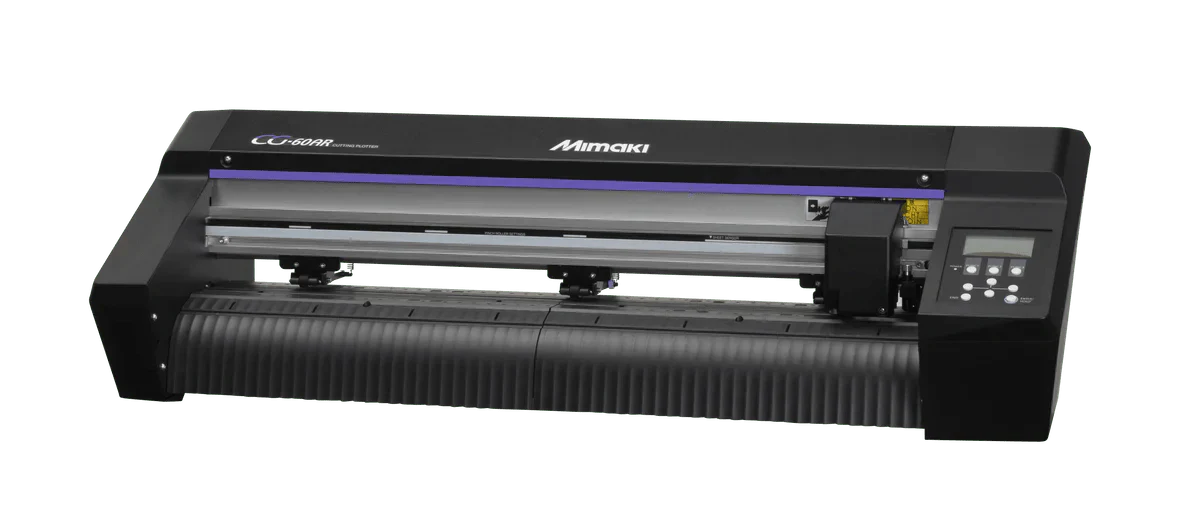
There are guillotine cutters with razor-sharp blades and powerful clamps. An even better option is the programmable or flatbed cutters. These electronic choppers ask for user input to cut papers exactly the same size. For to-the-point accuracy, programmable ones are more than perfect.
Cutters automatically make safety a part of the debate. The good thing is that modern cutters never fall short on safety upkeep. Two-hand operation, light curtains, blade guards, and other safety features make the paper-cutting process safe and beginner-friendly. That’s safety and professionalism combined.
8. Trimming
Trimming is a bit different than cutting in scale and purpose.
Cutters handle large stacks while trimmers are for precision with smaller quantities. Three-knife trimmers prevail at booklet production and cut all three sides simultaneously for spot-on squared edges.
For individual sheets and light-duty applications, rotary trimmers work wonders. Easy to set up. Apt for quick jobs.
9. Paper Drilling
Need clean holes for ring binders, presentation folders, and hanging file systems? Paper drilling equipment is your friend. Single-spindle drills handle quick and small jobs. Meanwhile, powering through thick stacks with multiple holes requires a multi-spindle.
Want to accommodate different binding systems? There are adjustable drilling patterns where a 3-hole punch for standard binders, a 2-hole punch for European patterns and custom configurations for specialized applications.
Clean holes imply smooth page turns. Ragged holes? That’s amateur hour.
10. Collating
You print your college notes and find out that they’re all jumbled and you need to sort them again. That’s peak frustration. You can’t spend your time organizing those papers when you already have a deadline around the corner. And with so much tech advancement, you don’t even need to.
Collating printing deals with this hassle. With this equipment, you can ditch that manual sorting and put it on autopilot with a collating machine.
These sheet-sorters collect pages in pre-determined sequences, assembling multi-page documents without human sorting. For large and multi-sectional prints like reports, manuals, and training materials, this comes as a handy feature.
Inline collators work with printers for continuous operation. Offline collators handle pre-printed sheets. For a ready-to-go-ahead document, some include stapling and folding capabilities as well.
Why let that redundant manual job eat up your time? Using collating equipment, you can sort it out with no effort.
11. Shredding
Though not directly related to printing, shredding still makes it to this list since security matters and these document-destroyers guarantee it.
Commercial shredders destroy sensitive documents, proprietary information, and production waste beyond reconstruction. Cross-cut and micro-cut options provide varying security levels.
High-capacity industrial shredders handle massive volumes. Desktop units manage daily office needs. Choose based on volume, security requirements and material types.
Proper document destruction isn’t paranoia. It’s a professional responsibility.
Conclusion
Printing is like writing the first draft. Messy, unorganized, and unstructured. Finishing gives that content a smooth and complete finish. Multiple machines contribute to this goal for an optimal result.
So, learning and knowing about these equipment categories inside out lets you figure out what’s needed and when, like forever transfer paper with heat presses lets you step into custom apparel and promotional product domain.
After all, you’ve to make your prints look and feel professional. Because you know the truth. It’s not just about completing the print; it’s about finishing it in a way that adds life to the paper.
