
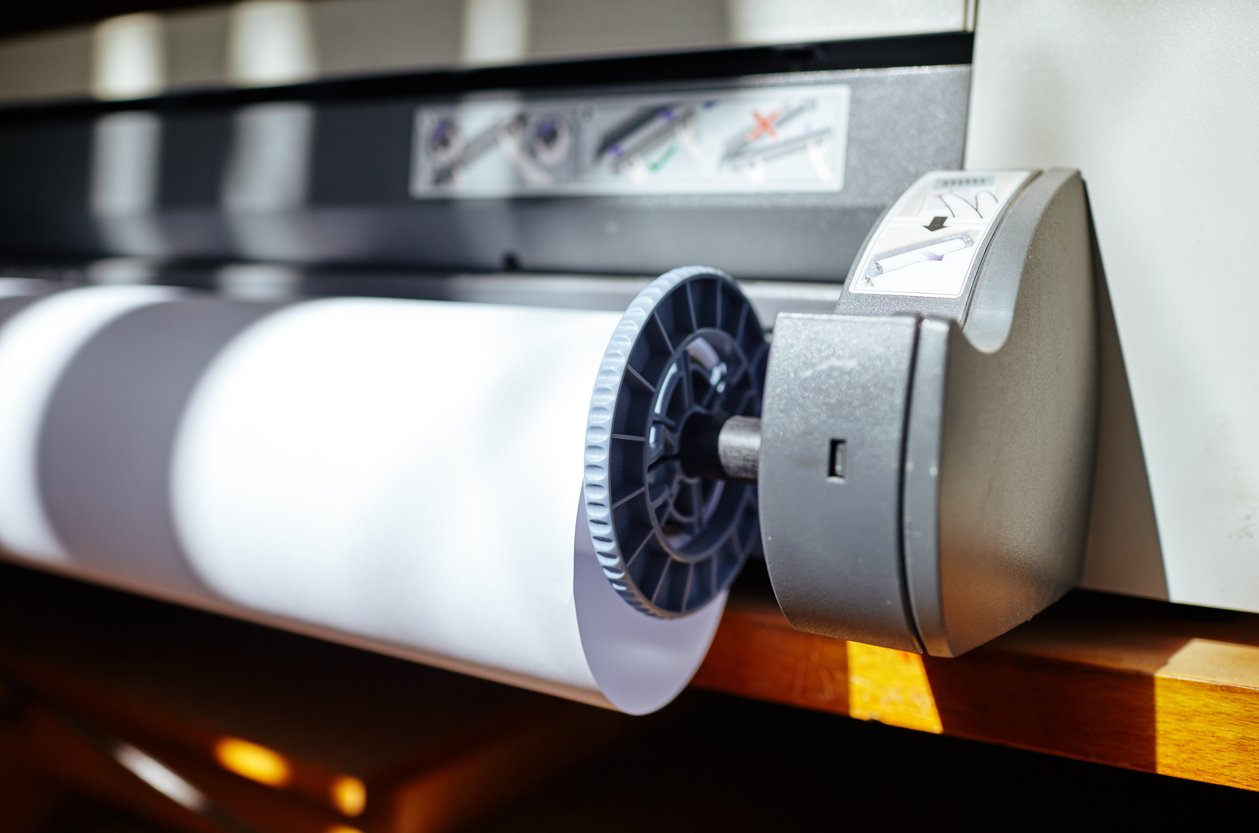
If you have a commercial printer for your business, cleaning and maintaining the printhead is important—after all, your printer won’t work if the printhead is broken or clogged. Even with proper care and maintenance, printheads will sometimes need to be replaced. But how do you know when to replace a printhead?
Understanding Printheads
Even the most inexpensive inkjet printer has a printhead. If a printhead breaks on a home printer, it’s usually more economical to simply buy a new printer. With expensive commercial printers, it’s cost-prohibitive to buy a new printer whenever the printhead breaks, so it’s replaced instead.
Printheads feed ink from cartridges; the ink is sprayed onto the paper through tiny nozzles. Piezo inkjet printheads use electric charges and vibrations to push ink out of the nozzles, while thermal inkjet printheads use heat to boil the ink and produce ink vapor, which is forced through the nozzle of the printhead.
As you can imagine, with different types of printheads, there are different ways to clean and repair them, and different answers to the question of when they should be replaced. Consult your printer’s manual and follow the manufacturer’s troubleshooting guidelines. (If you don’t have a manual for your printer, we maintain a library of printer service manuals on our website for your convenience.)
Signs You Need to Replace Your Printheads
If you notice a loss in print quality, it may be a sign that you need to replace a printhead. Unfortunately, it may also indicate that your printhead needs cleaning. How do you know which is needed?
It’s simple: clean the printhead first. Your printing system could just be clogged and in need of a good, thorough cleaning. Try using one of our approved cleaning systems to unclog your printhead. Run one or two cleaning cycles to clear out any dried ink. If you’ve done that and you’re still not seeing an improvement, the next step is to replace the ink cartridge. These two steps should resolve most printhead problems, but if they don’t, it’s likely time to replace your printhead.
Some printers make it even easier to diagnose a problem with the printhead—they state that there’s an issue with the printhead on their LCD screens. Naturally, such a message also indicates it's time to replace a printhead.
Purchasing a New Printhead Replacement
When you have a commercial or wide-format printer, replacing your printheads can take some research. You’ll find that there are seemingly endless options and confusing names and numbers, and it’s not always easy to find exactly what you need. That’s why we founded All Print Heads—our goal is to make it easier for businesses to find printhead replacements so they can get back to work.
Our expert team at All Print Heads has put together a 10-step guide to help you understand how to buy a printhead for a printer.
Common Causes of Printhead Failure
Understanding why printheads fail helps you prevent problems before they start. Most issues that lead to printhead replacement aren't sudden; they build up gradually through avoidable causes:
- Dried ink and clogs: Infrequent use lets ink dry inside nozzles, causing blockages that cleaning can't always fix.
- Using incompatible ink: Third-party or low-quality inks can damage nozzle components over time.
- Overheating: Running long print jobs without breaks can significantly stress thermal printheads.
- Physical damage: Debris inside the printer or rough handling during cartridge changes can crack or misalign the printhead.
- Age and wear: Even well-maintained printheads have a finite lifespan, especially in high-volume commercial environments.
Knowing these causes helps you decide whether to replace printer printhead components proactively or wait for a clear failure signal.
Printhead Repair vs Replacement: Which Is Better?
When print quality drops, the question of whether to repair or replace my printhead comes up quickly. Here's how the two options compare:
|
Repair |
Replacement |
|
|
Cost |
Lower upfront |
Higher upfront |
|
Time |
Can take days |
Faster turnaround with the right parts |
|
Effectiveness |
Works for minor clogs |
Best for worn or damaged heads |
|
Long-term value |
Short-term fix |
More reliable long-term |
|
Best for |
Mild clogs, early issues |
Persistent failure, age-related wear |
For minor issues, cleaning and repair make sense as a first step. But when printer printhead replacement is repeatedly needed just to maintain basic output, a full replacement is the more cost-effective call. All Print Heads makes it straightforward to find the exact part you need for your specific commercial printer model.
FAQ
Can a printhead be repaired instead of replaced?
For
Sometimes, yes. Mild clogs often respond well to a thorough cleaning cycle. But if you've cleaned repeatedly with no improvement, the question becomes when to replace printhead components. Persistent streaking, missing colors, or error messages on your printer's display are all clear signs that repair alone won't be enough.
How often should commercial printer printheads be replaced?
It depends on print volume and maintenance habits. High-volume commercial printers may need printer printhead replacement every 1 to 3 years. Regular cleaning extends lifespan significantly. If you're noticing consistent quality issues despite proper maintenance, don't wait too long. Delaying when to replace printhead components in a commercial setting can cost more due to wasted materials.
Will replacing the ink cartridge fix printhead problems?
It can, and it's always worth trying before you replace my printhead entirely. Fresh cartridges sometimes resolve clogs caused by dried or low ink. If swapping cartridges doesn't improve output after a cleaning cycle or two, the problem likely lies with the printhead itself, and a full printhead replacement is the next step.
How much does printhead replacement cost?
Cost varies widely depending on your printer model and brand. Consumer inkjet replacements are relatively affordable, while commercial and wide-format printer printhead replacement parts can run significantly higher. All Print Heads offers competitive pricing across a wide range of models, making it easier to replace printer printhead components without the confusion of searching through endless suppliers.
How can I make my printhead last longer?
Print regularly to keep ink flowing through nozzles, use manufacturer-approved inks, and run cleaning cycles at the first sign of quality issues. Knowing when to replace printhead parts before complete failure also protects surrounding components. Proper storage and keeping debris out of the printer can help delay the need for printhead replacement.
Conclusion: Protect Print Quality with Timely Printhead Replacement
A failing printhead doesn't have to mean a failing business. Knowing when to replace printhead components early saves you time, materials, and the frustration of consistently poor output. Whether you're dealing with streaks, missing colors, or persistent error messages, acting promptly is always the smarter call.
At All Print Heads, we specialize in printer printhead replacement parts for a wide range of commercial printer models. We've been in the business long enough to help you find exactly what you need, fast. Don't let a worn printhead slow you down. Visit All Print Heads today and resume printing at your best.
2 comments
JAIME GHISAYS
Sure, Bob. Here is the link. In stock now: https://www.allprintheads.com/products/printhead-for-hp-pro-8100-8600.
Let me know if you have any questions.
Jaime
Allprintheads
Bob Buske
I need a replacement printhead for the HP Office Jet Pro 8620 that needs to work with Windows 7. The Printer Product Number is A7F65A Serial number CN44HB40ZJ. Do you sell them or know who does.